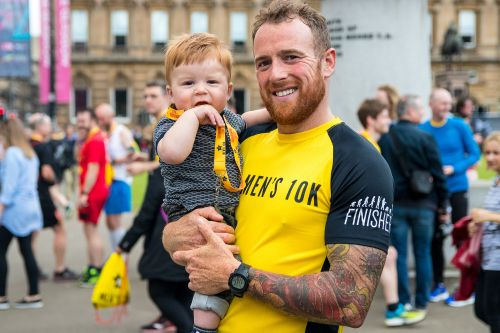
The Men’s 10K has become one of Scotland’s most recognisable mass participation running events, with large-scale annual editions held separately in both Glasgow and Edinburgh. Designed to promote physical activity, wellbeing, and community engagement, the Men’s 10K has helped reshape how men engage with organised running. Its history is closely linked to the rise of city-based participation events and the growing emphasis on inclusivity, accessibility, and social impact within sport.
What Is the Men’s 10K?
The Men’s 10K is a mass participation 10-kilometre running event staged on closed city streets and open urban spaces. Both the Glasgow Men’s 10K and the Edinburgh Men’s 10K welcome thousands of participants each year, including first-time runners, experienced recreational athletes, charity fundraisers, and social groups.
Rather than focusing on competition, results, or rankings, the events prioritise participation, personal achievement, and shared experience. This positioning has been central to their success and longevity.
The Growth of Mass Participation Running in Scotland
The origins of the Men’s 10K in both Glasgow and Edinburgh are closely tied to the wider growth of mass participation running in Scotland. As awareness of physical health, mental wellbeing, and lifestyle fitness increased, demand grew for events that were achievable, social, and motivating.
The 10K distance emerged as a natural fit. It provided a clear goal that encouraged training and commitment while remaining accessible to people with varying fitness levels. City-centre 10K events allowed organisers to engage large audiences while showcasing urban environments in a positive and inclusive way.
The Men’s 10K in Glasgow: A City Built for Participation
The Men’s 10K in Glasgow was established as a flagship mass participation event designed to reflect the city’s strong sporting culture and community identity. Glasgow’s wide streets, riverfront areas, and iconic architecture made it well suited to hosting large-scale participation events.
The Glasgow event is often characterised by its lively atmosphere and strong local support. Participants run through familiar neighbourhoods, supported by spectators and volunteers, creating a sense of shared ownership and civic pride. Many entrants take part as part of charity teams, workplace initiatives, or community groups, reinforcing the social nature of the event.
The Men’s 10K in Edinburgh: A Capital City Experience
The Edinburgh Men’s 10K offers a distinct experience shaped by the city’s historic setting and scenic urban landscape. Routes often incorporate central streets, parkland, and architectural landmarks, allowing participants to experience Edinburgh from a unique perspective.
As a mass participation event, the Edinburgh Men’s 10K attracts a high proportion of participants from outside the city. Many choose the event as a destination experience, combining physical activity with time spent exploring Scotland’s capital. This has helped establish the Edinburgh event as both a sporting and cultural occasion.
Charity Fundraising as a Core Purpose
Charity fundraising has always been central to the identity of the Men’s 10K in both Glasgow and Edinburgh. A significant proportion of participants take part to support causes related to health, social care, mental wellbeing, and community services.
This fundraising focus has helped position the Men’s 10K as more than a fitness challenge. It is widely seen as an opportunity to contribute to meaningful causes while pursuing personal goals. Over time, the events have helped raise substantial sums for charities across Scotland and the wider UK.
Encouraging Men to Engage with Physical Activity
One of the most important impacts of the Men’s 10K has been its role in encouraging men to engage with regular physical activity. Research has consistently shown that men are less likely to participate in organised health initiatives, particularly those linked to preventative wellbeing.
The Men’s 10K provides a clear, time-bound goal that motivates training and lifestyle change. Many participants use the event as a catalyst to begin running or walking regularly, often continuing these habits long after the event itself.
Participant Journeys and Personal Achievement
For many participants, the Men’s 10K represents a significant personal milestone. Some enter as complete beginners, using structured training plans or charity support to prepare. Others return year after year, using the event as a consistent fitness goal.
The emphasis on participation rather than performance allows individuals to define success on their own terms, whether that means completing the distance, supporting a cause, or simply taking part.
Community, Volunteering, and City Transformation
Delivering a mass participation event of this scale requires extensive community involvement. Volunteers play a vital role in supporting participants, managing routes, and creating a welcoming atmosphere.
Both Glasgow and Edinburgh are temporarily transformed during the events, with streets becoming shared spaces for movement, encouragement, and celebration. This transformation reinforces the role of public spaces in supporting active lifestyles.
Economic and Tourism Impact
The Men’s 10K delivers measurable economic benefits to both host cities. Participants and supporters contribute to local hotels, restaurants, cafes, and transport services. The Edinburgh event, in particular, benefits from destination tourism, with many visitors extending their stay.
These economic impacts strengthen the case for mass participation events as valuable components of urban cultural life.
The Men’s 10K Today and Its Ongoing Legacy
Today, the Men’s 10K in Glasgow and the Men’s 10K in Edinburgh stand as two of Scotland’s most successful mass participation running events. While each reflects the unique character of its city, both share a commitment to inclusivity, wellbeing, and social impact.
Their continued popularity demonstrates the enduring appeal of events that prioritise participation, community, and personal achievement over competition.